
What to expect
Portugal. The Road through Meaning
Any country, if not to find fault with the details, can be represented as a set of disparate sensations: visual images, historical episodes, scraps of melodies, features of speech, tastes and smells. From all this a mosaic is formed - sometimes convincing, sometimes superficial. This is a way that often works.
But with Portugal, he's stubbornly failing.
One can recall its colossal past, a power that stretched over millions of square kilometers. You can add the sound of the guitar, the sad intonations of the old fado, the patterns of ceramic tiles, the strict pattern of cobbled streets, the tartness of wine from the banks of the Douro, the smoke of fried fish, the lines of poets in which the sea becomes a metaphor for fate. All this will be true, and yet something essential will be missing.
Probably that special state which is felt almost physically here: a quiet longing without a reason, the expectation of the impossible, the belief in the return of the lost. This feeling does not fit into formulas and does not disappear, despite the rational twenty-first century.
And if the folded picture is missing a key fragment, the only way is to go and see for yourself.To live in that space, to breathe in its air, to let it accentuate. So let's go.
Day one
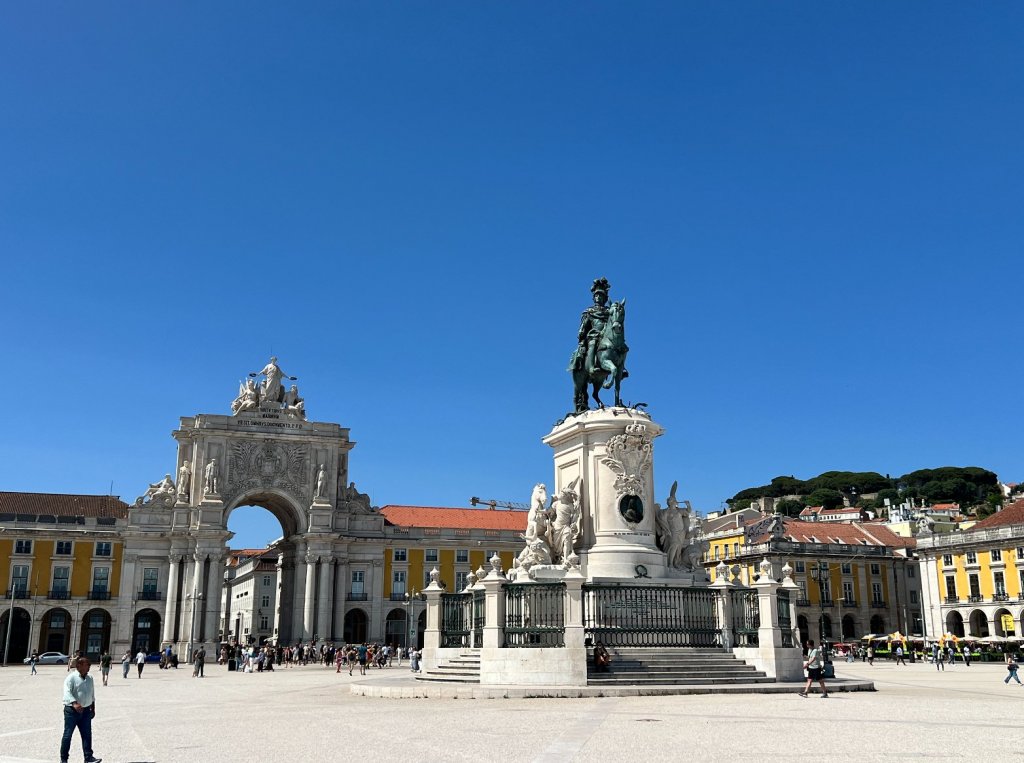
Arrival in Lisbon is a city that stands at the very edge of Europe and constantly faces the ocean. Here, the Tagus, passing through the entire Iberian Peninsula, loses its outline and becomes part of the Atlantic. The city sets the tone: movement, light, hills, feeling the beginning of a great journey.
Ascents and descents, trams, observation decks - Lisbon is not opened immediately, it requires addiction. This day is needed for this: to catch the rhythm, to feel the scale and tune in to the country.
Day two
Full day in Lisbon.
We start with the Gulbenkian Museum, one of the best art collections in Europe, collected by a man who found refuge here during the World War. Then there is the Se Cathedral, harsh and ascetic, almost devoid of decoration, but filled with a sense of the depth of time.
We go up to Alphama, the oldest district of the city. Narrow streets, traces of the Moorish past, a sense of a labyrinth. Above is the fortress of St. George, from where you can see the panorama of Lisbon and the river.These neighborhoods survived the catastrophic earthquake of 1755, which changed not only the city, but also the worldview of the era.
We descend to Baisha, an area rebuilt according to the strict plan of the Enlightenment. Squares, elevators, perspectives, access to the water – Lisbon is changing its face again.
Day three
A trip to Sintra is the royal residence among the hills. A city with a special microclimate, where the monarchs left from the summer heat. The National Palace with its characteristic conical pipes, which have long become a symbol of Sintra.
Then – climbing the mountains to the Palace of Pena, a fantastic building of the XIX century, created as an architectural whim, combining Gothic, Renaissance and romanticism. It looks like it was invented in a dream.
The end of the day is Cape Roca, the westernmost point of continental Europe. A place where you feel the end of the continent and the greatness of the mighty ocean with cinematic views of the rocks.
Day four.
Departure from Lisbon.
The first stop is Mafra Palace, a grand Baroque complex with over a thousand rooms. The scale of the construction is directly related to the wealth of the colonial era and royal ambitions.
Then - Obidos, a compact medieval city surrounded by a fortress wall.Walking through the streets and tasting cherry ginge liquor served in chocolate cups is a local tradition.
By evening we arrive in Nazaré, a fishing town on the Atlantic, known as the place with the largest waves formed due to the underwater canyon with a length of 230 km. The upper city gives views of the ocean, the lower one - overlooks the wide beaches.
Day five.
In the morning we go to Tomar, the former center of the Templar Order. The Castle and Monastery of Christ have preserved unique elements of medieval architecture and symbolism. Downstairs is the city and one of Portugal’s oldest synagogues.
Next is the monastery of Alcobasa, associated with the royal dynasty and the tragic history of Ines de Castro.
After – Batalha, a Dominican monastery, built in honor of the military victory, one of the masterpieces of Portuguese Gothic.
Fatima is the largest center of Catholic pilgrimage in the country. Back for the night in Nazar.
Sixth day
Today we have a long road ahead of us, crossing the country from south to north. The landscape is gradually changing: it becomes cooler, stricter, stoner. The first stop is Coimbra, a city whose name is almost synonymous with the word “education” for the Portuguese.
Here is the oldest university in the country, founded in the XIII century. We'll go up to the top of it, where academic life is centered. The main treasure is the Joanin Library: a three-story baroque space with carved bookcases, gilding and thousands of volumes, many of which have survived centuries. An interesting detail is that bats still live here, guarding books from insects.
Walking through the city goes from top to bottom - this is how Coimbra works. Narrow streets, old courtyards, students in black capes that look like time is a little stuck here.
After, Aveiro. It is called the “Portuguese Venice”, although the comparison is conditional. The canals are quieter, chamberier, and the bright moliseyru boats were once used to harvest seaweed. Walking on the water allows you to see the city from an unusual angle.
We'll be in Porto by evening. A stop on the high bank above the Douro River is the first look at a city that is rarely forgotten.
Day seven.
Porto is a city of a different nature than Lisbon. It is more severe, heavier, and is made of granite and labor. There's less dreaminess and more perseverance.
We start with the Palace of the Exchange, a grand building of the XIX century, built as a demonstration of the economic power of the city. Especially impressive is the Arabian Hall, decorated in the then fashionable Oriental style.
Nearby is the Church of St. Francis, almost ascetic on the outside, and inside completely covered with carved gold. This contrast is a characteristic feature of Porto.
Next, a walk along Ribeira, the city’s oldest waterfront, where houses stand close to each other, and life has been connected to the river for centuries. We will go out into the water and pass under six bridges, each of which tells its own story. One of them was built according to the project of Eiffel’s student.
We look at the station of San Bento, where the walls are covered with azulejo panels telling the history of the country. Visit the famous bookstore Livraria Lello, and then go to the opposite shore, in Vila Nova de Gaia - where port wine has been aged for centuries. The tasting will be the logical end of the day.
Add to this the Kaduri Synagogue, the largest in the Pyrenees, the House of Music of Modern Architecture and several Baroque churches. The day will be full and whole.
Day eight
Today we are going to where Portugal started.
Guimarães is a small city, but its importance is huge.It was here in the XII century that the sovereignty of the new kingdom was proclaimed. The medieval center is remarkably well preserved: stone houses, arcades, squares without haste.
Above the town is a castle associated with the name of the first king Afonso Henriques. Climbing the walls, it’s easy to imagine how fragile this state was at its birth.
Next is Braga, one of the oldest cities in the country and the most important religious center. There are many temples, but the main purpose is the Bom Jesus do Monte complex. The Baroque staircase with terraces and symbolic fountains turns the climb into a philosophical journey. We're going to use the country's oldest water-based funicular. From the top there are impressive views of the surrounding area.
Day nine.
Today, the route passes through the Douro Valley, one of Europe’s most expressive cultural landscapes. The vineyard terraces that descend to the river have been created by hand for centuries. This landscape is recognized as a UNESCO World Heritage Site as an example of the rare balance between man and nature.
We will visit the traditional wine estate.We will learn how to grow grapes, how port wine differs from ordinary wine, why the aging and climate of the valley are so important. Tasting will allow you to feel the character of the region – dense, warm, complex.
A walk along the river will open the valley from the water: the slopes become almost theatrical, and the scale of the space is especially tangible. We sleep here, among the vineyards and evening silence.
Day tenth
The road leads to Alentejo, a region of space and light. There are fewer cities and more sky.
Monsanto is a village that grew up among giant granite blocks. The stone here is not just a background, but part of houses, roofs and streets. The hilltop opens up the far horizons, and it becomes clear why this place has always been of strategic importance.
Marvao is a fortress on the edge of a cliff near the Spanish border. The walls repeat the relief of the mountain, and the views go far beyond the country.
Castelo de Vide is a softer, greener city with a Jewish quarter, narrow streets and traces of past cultural coexistence. We're staying here for the night.
Day eleven
Evora is a city that cannot be confused with any other. It looks like a museum, but it's alive.
In the center is a Roman temple of the first century, surprisingly well preserved.Nearby are medieval streets, monasteries and a university.
Visit St. Francis Church with its chapel of bones, where human remains are turned into architecture. This is not a gloomy exoticism, but a philosophical statement about frailty.
In the former monastery there is a huge collection of Christmas den. The university halls are decorated with azulejo with allegories of science and pastoral scenes.
On the way - Arrayolos, the center of traditional carpet weaving. Here still manually create wool carpets on technologies dating back to the Middle Ages.
Day twelfth
Today we are slowly returning to Lisbon, enjoying the latest experiences.
We will go to the statue of Christ, towering above the city. She greets us with open arms, as if she embraces the bay and the surrounding area. From the height, a panorama opens: red roofs of houses, the brilliance of the river and the vastness of the ocean.
The next way is to Setubal, a port city with a lively old quarter and market streets, where time flows slowly and calmly.
The next point is Azeitao, where azulejo tiles are still created using ancient technology.We will see how craftsmen burn tiles, paint complex patterns and turn ceramics into a real art that has graced Portuguese palaces and temples for centuries.
Day thirteen
Departure.
Stories are told, roads are traversed, glasses are raised. Portugal is remembered not as a set of places, but as a state of light, wind, ocean and a feeling that is hard to name but easy to remember.
Discuss the details in chat
Message a specialist right away or choose an option first. We will agree the dates, itinerary and final price in chat.