What to expect
About the trip
Tour of Istanbul. Discuss the itinerary, travel dates and party size with our specialist. We will confirm the included services and provide an individual quote before booking.
The programme below is indicative. We will confirm dates, inclusions and the final price in chat before booking.
Duration and format
6 hours
Itinerary
During this tour you will visit.
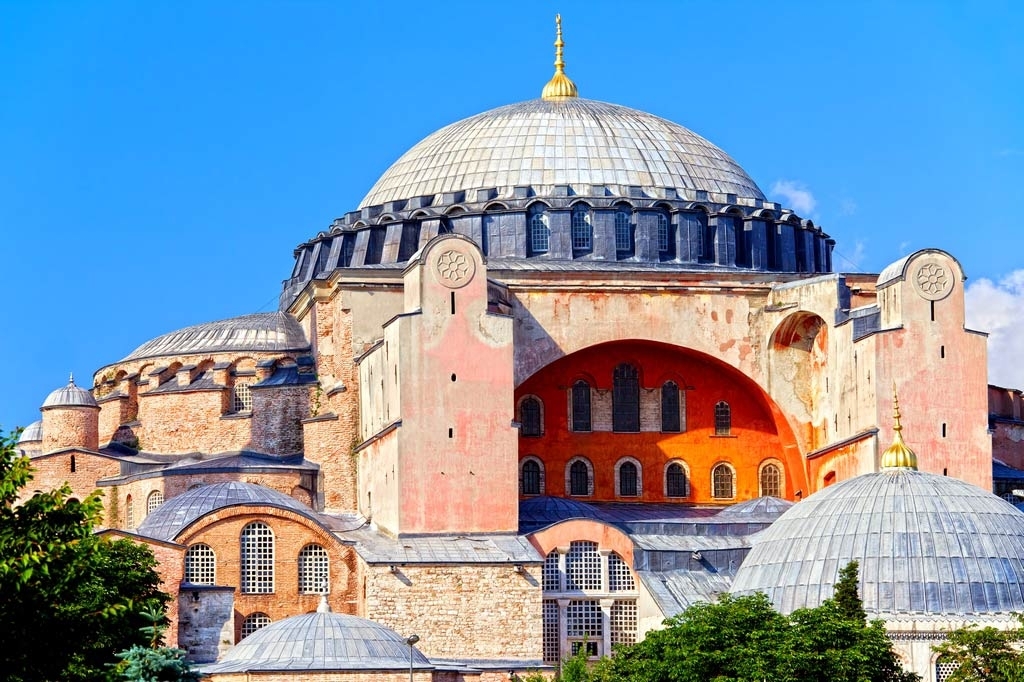
1. Hagia Sophia Temple
2. Basilica Cistern
3. Blue Mosque
4. Roman Hippodrome
5. Bosphorus Walk on the Bosphorus on the Boat (1.5 hours)
6. Egyptian Bazaar
1. The Temple of Hagia Sophia - This masterpiece of ancient Byzantine architecture was built in the VI century by order of Emperor Justinian. The Emperor Justinian opened it on Christmas Day, raising his hands to the sky and saying, “I have surpassed you, Solomon!” The cost of building the temple was enormous and amounted to three annual revenues of the Byzantine state, approximately 130 tons of gold. It is a symbol of the golden age of Byzantium. When it was built, the Eastern churches began to separate from the Western churches. It is the oldest Orthodox church in the world, it is 1,479 years old. It remained the largest Christian temple in the world for 916 years (until the construction of St. Peter in the Vatican in the seventeenth century). At the beginning of the XIII century it was looted by the Crusaders, and in the XV century the Ottomans who captured the city turned it into a mosque. After the founding of the Republic of Turkey in 1935, by decree of the state, they turned it into a museum. Now it became the most popular object of the Byzantine period. The temple is striking with its scale and beautiful interior.
2.Basilica Cistern (Underground Reservoir) – In the VI century, under the rule of the Byzantine emperor Justinian, a huge reservoir was built in the acropolis of the old city. It is located in the historic center next to the temple of Hagia Sophia. The cistern kept a large supply of drinking water in case of drought or siege of the city. About 100,000 tons of water are placed here. At the base of the two columns are the inverted heads of Medusa Gorgona - one looking down and the other to the side. Historians still can’t figure out where these heads of Medusa came from. Even today, it is the largest Roman underground reservoir in Europe.
3. Blue Mosque – The mosque was built in the XVII century directly opposite the Sophia temple by order of Sultan Ahmed I. The name “Blue Mosque” was derived from 21,043 blue, green and white ceramic tiles used in the interior decorations. Flowers of tulips, hyacinths, pomegranate, roses, grapes and cypress decorate the tiles. The mosque has more than 50 different completed compositions and patterns. In addition, thanks to the 260 stained glass windows, the spaciousness and grandeur of the mosque is felt.Thanks to the unique location of the windows, it seems as if the dome is suspended in the air. It is the only mosque with 6 minarets in Turkey. The Blue Mosque is one of the symbols of the city.
4. Roman Hippodrome – After the city became part of the Roman Empire, Emperor Septimius Severus built a large Hippodrome in the third century to entertain the people, where chariot races, gladiatorial fights and circuses were held, as in the Colosseum in Rome. The capacity of the racetrack was about 100,000 people. It has been the heart of Constantinople’s political and sporting life for 500 years. Here you can see the oldest monument of Istanbul - the Egyptian Obelisk, which is 3,500 years old. It was brought in the IV century from Egypt, its weight is about 100 tons. There is also the obelisk of Constantine VII and the Serpent Column. The Crusaders took away the precious monuments that were on the Hippodrome, and today only these three monuments remain there.
5. Bosphorus Walk on a Bosphorus (1.5 hours) – The Bosphorus Strait connects the Black Sea with the Marmara Sea. On both sides of the Strait is the largest Turkish city of Istanbul. The strait is about 30 km long.The maximum width of the strait is 3700 m in the north, the minimum width is 700 meters. The depth is 33 to 90 m. We will see with you on the Bosphorus the most expensive mansions that have remained since the Ottoman Empire, as well as new villas and fish restaurants.
6. The Egyptian Bazaar is Istanbul’s second largest market. Located in the old part of Istanbul, in the Eminönü district. It was built in the 17th century. The bazaar got its name because the bulk of spices and spices (at that time) were supplied from Egypt. At the moment, in addition to caviar and saffron, most products are Turkish. You can buy the most delicious sweets (rahat lokum) fruit teas, pistachios, nuts and, of course, Turkish coffee.
What is included
- Inclusions will be agreed in the individual quote. Guiding, transport, admission and meals must be confirmed separately; appearing in an itinerary does not automatically mean they are included.
What is excluded and paid separately
- Extra services, meals, shopping and paid visits not listed in the agreed quote. Mandatory supplements will be shown before payment.
Price and options
We will quote for your dates and party size. Tell us how many people are travelling and your preferred format; a specialist will check availability and provide itemised inclusions and extras.
How to arrange your trip
- Select “Clarify details” to open a chat for this trip with a ready-made message.
- Send it as it is or add dates, adult and child numbers and your preferences. Dates can be agreed later.
- A specialist will confirm the itinerary, meeting point, availability, price and cancellation terms before payment.
Details
- Интересы
- Obzornye ekskursii
- Способ передвижения
- Avtomobil ili avtobus
Discuss the details in chat
Message a specialist right away or choose an option first. We will agree the dates, itinerary and final price in chat.